
"30 degrees"
7000 article(s) found
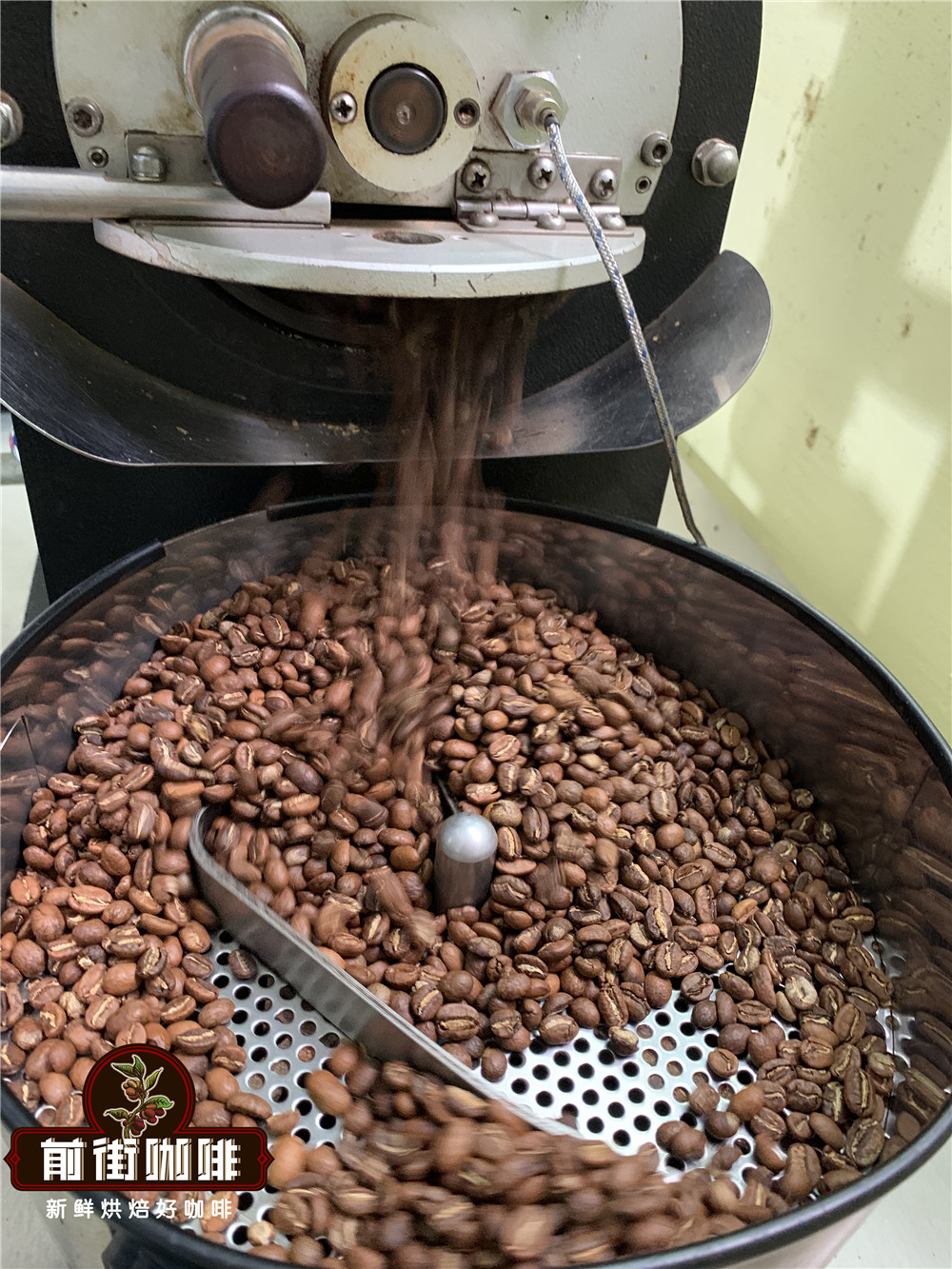
Coffee beans are light, moderate and deep roasting flavors. Taste distinguishes where the sweet and sour feelings in coffee beans come from.
Professional coffee knowledge exchange more coffee bean information please pay attention to the coffee workshop (Wechat official account cafe_style) roasting meaning 1, the definition of roasting so-called coffee roasting (coffee roasting) refers to the heating of raw beans, to promote a series of physical and chemical reactions inside and outside of coffee, and in the process to produce coffee sour, bitter, sweet and other flavors, shape

Sumatran Coffee Bean Variety Starbucks Tiger Packaging Story Indonesia Mantenin Taste
Professional baristas please follow the coffee workshop (Wechat official account cafe_style) Sumatra exudes an obvious earth flavor, thick and full-bodied, staying in the taste buds reverberating. Mellow, rustic, with aromas of herbs and spices, plain and simple but beloved. Coffee whisper (Story Note) Sumatra is one of the largest islands in Indonesia.

Hand flushing technique-high temperature steaming and low temperature extraction of hand steaming water?
Professional coffee knowledge exchange more coffee bean information please follow the coffee workshop (Wechat official account cafe_style) hand coffee steaming and water injection methods hand coffee water temperature and powder than data steaming! The fragrance is bubbling! When brewing a cup of hand-made coffee, there is a step called steaming, which means that when hot water is injected and sit for a while, the coffee powder begins to bubble and take the shape of a human.
Coffee trees grow around the equator.
Coffee trees grow in tropical or subtropical agricultural gardens centered around the equator and called coffee belts. Most of the coffee production is between the Tropic of Cancer, 25 degrees north of the tropical or subtropical equator and 30 degrees south of the equator. An area with an annual average temperature of 16-25 degrees Celsius, no Frosts Descent and rainfall of 1600-2000 mm. At present, coffee is mainly produced by seven countries.

The story of Guatemalan coffee beans how much is a cup of Guatemalan coffee?
Professional coffee knowledge exchange more coffee bean information please follow the coffee workshop (Wechat official account cafe_style) 01 | Guatemala coffee bean cultivation history Guatemala coffee bean planting altitude Guatemala coffee beans grow in the high altitude cloud belt, the morning and evening temperature difference such climate conditions make coffee growth rate will not be too fast, (because coffee growth rate is too fast

Introduction of Brazilian Red Bourbon Coffee Bean | past Life and present Life of the Family of Red bourbon Coffee Bean
Brazilian red bourbon cost-effective, taste balanced Brazilian single coffee [country] Brazil Barsil [variety] red bourbon, Red Bourbon [treatment] hand extract, and then half-sun treatment [origin] South Minas [altitude] 700m-1200m [treatment method] semi-washed [flavor] high sweetness, clean, supple, low acid value, tropical fruit flavor. 0
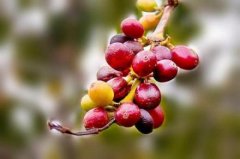
Coffee knowledge equator-centered coffee belt
Most of the coffee production is between the Tropic of Cancer, 25 degrees north of the tropical or subtropical equator and 30 degrees south of the equator. An area with an annual average temperature of 16-25 degrees Celsius, no Frosts Descent and rainfall of 1600-2000 mm. At present, coffee is mainly produced in more than 70 countries. The Big self is located at an altitude of 300,400m, sometimes between 2000 and 2500 meters above sea level.

Hand-made teaching | using American method to extract coffee with ice in chemex pot.
▲ Click to follow | Daily Fine Coffee Culture Magazine Coffee Industry Exchange Please add private coffee in front of Wechat, WeChat account: (long click to copy) FrontStreetCoffee American method uses chemx pot ice extract coffee [ice extraction process] 60g powder (shallow roasted beans) 205g (96 degrees Fahrenheit) moderate grind 450g ice cubes into 100g water, stir and inject 350g again

Espresso operation: the most common concept of espresso in Europe and the United States
Start with the result that 30cc/ 30sec gets a perfect Espresso. These two values of course depend on beans, and the differences in baking method, baking degree and formula ratio will naturally lead to changes in the reference point. The amount of extraction is inversely proportional to the extraction time: the more the amount of extraction is, the shorter the contact time between coffee powder and hot water must be (avoid excessive extraction). On the contrary, when extraction

Coffee Basics Where is the coffee belt distributed
Coffee production occurs mostly between Tropic of Cancer, 25 degrees north of the equator and 30 degrees south of the equator in tropical or subtropical regions. Areas with an annual average temperature of 16-25 degrees Celsius, frost-free and rainfall of 1600-2000 mm. At present, there are more than 70 major coffee producing countries. The largest one is located at an altitude of 300-400 meters, and sometimes at an altitude of 2000-2500 meters.

What flavor matches best with Kenyan coffee beans? description of Kenyan coffee flavor characteristics
Following Cafe Review (Wechat official account vdailycom) found that Kenya is a small shop of African beans, with the unique sour taste of African beans (sour fruit, floral flavor, citric acid flavor depends specifically on the quality). Generally, if you want to match it with other flavors, you have to combine it with other flavors, and if you match it with very sour fruit, it may turn out to be the opposite. Coffee taste: Ken

Coffee Manor-introduction of Rose Summer Coffee beans and Iron pickup Coffee beans in Erida Manor, Panama
Professional coffee knowledge exchange more coffee bean information Please pay attention to coffee workshop (Wechat official account cafe_style) Coffee producing areas are distributed in different parts of the world, mainly in several major producing areas, such as Central America, South America, Africa, Southeast Asia, Yunnan, China, etc., different manors in different producing areas, due to different altitude, soil, temperature, precipitation, etc., coffee aroma and taste are also different.

Daily brewing of Qianjie coffee | what is the difference between V60 filter cup and diamond filter cup?
Professional coffee knowledge exchange more coffee bean information please pay attention to the coffee workshop (Wechat official account cafe_style) preface of each filter cup, due to the shape, filter holes and grooves of the match, will have a different impact on the taste of the extraction, each filter cup has its own design advantages, basically to control the speed of flow decline, ribs and exhaust trade-off. According to the principle of hand-brewing coffee

[Qianjie barista's Note] are the coffee brewing parameters the same for smart cups and French presses?
Professional coffee knowledge exchange more coffee bean information Please pay attention to the coffee workshop (Wechat official account cafe_style) when talking about immersion extraction, the editor thinks of the French kettle and the smart cup, so the flavor extracted between them will be similar? Or do you have different styles? The editor will do a comparative experiment for you in a moment! Let's take a look at the Smart Cup first.

The difference between espresso and black coffee does espresso belong to black coffee?
Authentic espresso (espresso), the standard for espresso extraction, is made of about 30ml by close to boiling high-pressure hot water (about 92-94 degrees Celsius, 9bar atmospheric pressure), 20-30 seconds extraction time, through fine grinding, flat pressure coffee pressed powder.
Where is the basic knowledge of boutique coffee?
Coffee trees grow in tropical or subtropical agricultural gardens centered around the equator and called coffee belts. Most of the coffee production is between the Tropic of Cancer, 25 degrees north of the tropical or subtropical equator and 30 degrees south of the equator. An area with an annual average temperature of 16-25 degrees Celsius, no Frosts Descent and rainfall of 1600-2000 mm. At present, coffee is mainly produced by seven countries.

Indonesia PWN Gold Manning Coffee hand data Indonesia PWN Gold Manning how to drink
For the exchange of professional baristas, please follow the Manning made by hand in the coffee workshop (Wechat official account cafe_style). 15g powder, medium grinding (small Fuji ghost tooth cutter 4 grinding), v60 filter cup, 88-89 degrees water temperature, 30g water injection for the first time, steaming for 27 seconds, water injection to 105g water cut off, wait for the water volume of powder bed to be reduced to half and then water injection, slow water injection until 225g water, do not use water at the end.

How to brew coffee by hand for 4 people? How many grams of coffee powder do you need for 4 people?
Is brewing coffee for 1-2 people the same as coffee for 3-4 people? In fact, if you actually operate once, you will find that the brewing process is a little different, and the final flavor will be a little different, so how to fine-tune the parameters to stabilize the flavor of coffee. What is the difference between the large amount of powder and the usual cooking? The increase in the amount of powder means that the total amount of water injection also increases, for example

Introduction to Ethiopia on the treatment of Manor Grinding degree of Coffee beans in the Sun Yega Snow Flavor
Yega Sheffivoka Origin: Ethiopian year: 2015 appearance: 13-15 mesh Grand 1 raw bean treatment: sun roasting: city suitable for brewing: hand brewing, siphon, pressure brewing temperature: single coffee at 88-92 degrees Italian machine at 92-93 degrees Celsius using water washing and fermentation methods to remove the skin, pulp and mucous membrane, the farm using water washing must build a washing pool.
Coffee common sense what is a coffee belt (COFFEE WORLD MAP)
Coffee trees grow in tropical or subtropical agricultural gardens centered around the equator and called coffee belts. Most of the coffee production is between the Tropic of Cancer, 25 degrees north of the tropical or subtropical equator and 30 degrees south of the equator. An area with an annual average temperature of 16-25 degrees Celsius, no Frosts Descent and rainfall of 1600-2000 mm. At present, coffee is mainly produced by seven countries.